



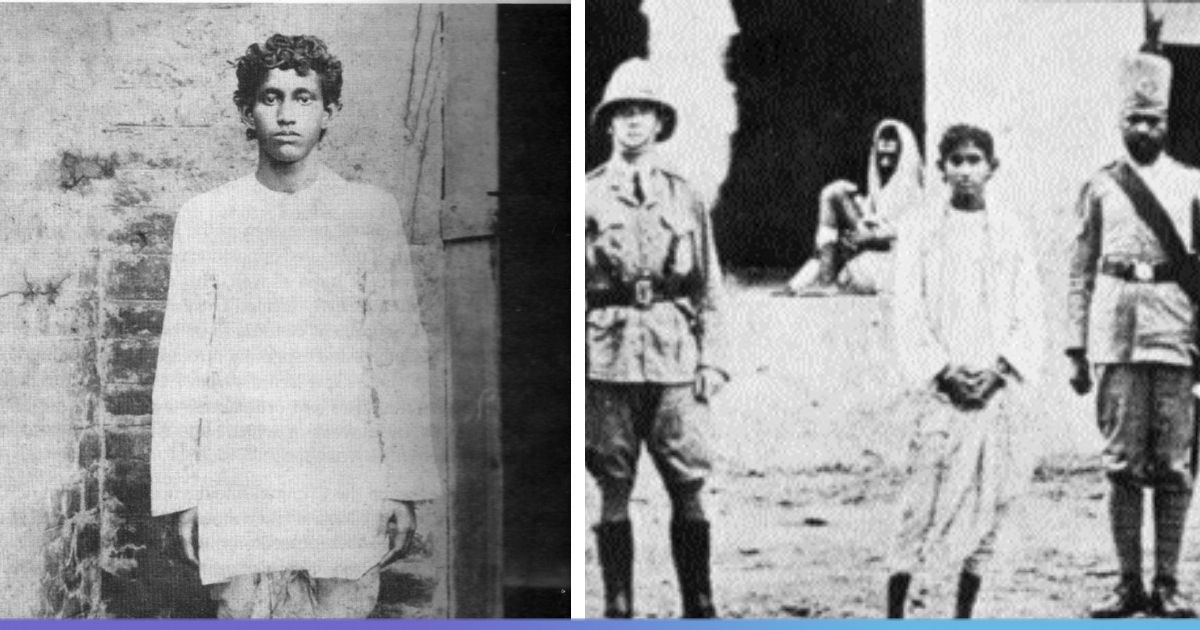
Khudiram Bose remains one of the most luminous names in the history of India’s struggle for independence. His life, though painfully short, blazes with a passion and fearlessness that continues to inspire generations. Born in the small village of Mohobani in Midnapore district of Bengal on 3 December 1889, Khudiram’s birthday is celebrated every year as a moment of reflection on the extraordinary courage of a teenager who embraced death with a smile for the freedom of his nation. The crux of his story lies in his unshakeable commitment to revolutionary ideals, his daring acts against colonial oppression and his remarkable calmness in the face of his death sentence in 1908.
Khudiram’s childhood gave early hints of the spirit that would someday shake the British Empire. Losing both parents at a young age, he grew up in relative hardship but developed a strong sense of self reliance and ethical clarity. As a boy, he was drawn to tales of resistance and to the writings of nationalist thinkers. The atmosphere of Bengal during the Swadeshi movement had ignited revolutionary sentiments everywhere and young Khudiram found himself captivated by the call to defy unjust rule. The crux of his early years was his instinctive rejection of subservience and his search for a greater purpose.
By the time he was in his mid teens, Khudiram had already joined the Anushilan Samiti, a revolutionary organisation that trained young patriots in physical strength, ideological discipline and clandestine resistance. He quickly emerged as one of the most energetic volunteers. He distributed pamphlets, took part in rallies and even courted danger by posting anti government notices outside police stations. The British administration began to take note of this unusually bold teenager. The crux of his revolutionary involvement was the belief that liberation demanded action and sacrifice, not just words.
The turning point of Khudiram’s life came when British official Kingsford, a harsh and vindictive magistrate known for giving cruel punishments to nationalists, became the target of a planned revolutionary attack. Khudiram and his comrade Prafulla Chaki were entrusted with the mission to eliminate Kingsford, who had by then been transferred to Muzaffarpur in Bihar. The decision reflected the growing resolve among revolutionaries that oppressive instruments of colonial power had to be directly confronted. The crux of the mission was not hatred of an individual but resistance against a tyrannical structure.
Khudiram and Prafulla travelled to Muzaffarpur disguised as students and spent days observing Kingsford’s movements. On the evening of 30 April 1908, they executed their plan and threw a bomb at a carriage believed to be carrying Kingsford. Tragically, the carriage was occupied not by Kingsford but by the wife and daughter of a British barrister, both of whom lost their lives. The incident shook the British administration and set in motion an intense manhunt. The crux of this episode lay in the revolutionaries’ determination to challenge imperial cruelty, though fate took a sorrowful turn.
Soon after the attack, the police closed in and the two young revolutionaries parted to avoid immediate capture. Prafulla Chaki, confronted by armed policemen, shot himself to prevent arrest. Khudiram, exhausted and alone, was eventually caught by constables near a railway station. He was just eighteen but displayed extraordinary composure. At the time of arrest, he was found wearing a dhoti, shirt and the simple sandals that would later become symbols of fearless youth. The crux of this moment was the striking contrast between his boyish appearance and his astonishing courage.
Khudiram’s trial in the British court was swift but charged with political significance. Despite being assigned lawyers, Khudiram took responsibility for his actions, refusing to betray comrades or plead for mercy. The prosecution presented him as a dangerous rebel while the youth stood firm, serene and unrepentant. The courtroom spectators were astonished by his calm dignity. The crux of the trial was that Khudiram was fighting not for acquittal but for the honour of the cause to which he had devoted his life.
On 13 June 1908, the verdict was pronounced. Khudiram Bose was sentenced to death by hanging. He received the judgment with an unbroken smile. Appeals were filed, petitions were submitted and prominent Indians raised their voices but the colonial government refused to reconsider. When news of the sentence spread, Bengal erupted in grief and anger. Students marched in protest, songs were written in his honour and the name Khudiram became a rallying cry for resistance. The crux of public response was the awakening of national pride through his sacrifice.
On the morning of 11 August 1908, Khudiram walked to the gallows in Muzaffarpur Central Jail with unwavering bravery. Eyewitness accounts describe him smiling, chanting patriotic hymns and showing no fear. He was just eighteen years and eight months old, making him one of the youngest martyrs of India’s freedom struggle. His execution sent shockwaves across the subcontinent. Newspapers, even those cautious under censorship, admired the boldness of this young Bengali revolutionary. The crux of his martyrdom was the profound message that the spirit of freedom could not be crushed even by death.
Khudiram’s legacy survives because it is not bound to a single event or ideology. He embodies youthful optimism, unbreakable resolve and the belief that freedom demands uncompromising dedication. His birthday every 3 December is more than a date on the calendar. It is a reminder of the extraordinary potential within every young mind and of the courage that can transform even the most ordinary life into an immortal story. His martyrdom in August 1908 continues to inspire writers, filmmakers, historians and ordinary citizens who see in him the living flame of India’s national consciousness. The crux of his remembrance lies in celebrating the strength of conviction.
Khudiram Bose did not live to see India’s independence but his contribution remains immeasurable. His short life taught generations that resistance to injustice is the sacred duty of every individual. His smile before death taught the world that courage has no age. His legacy continues to ignite hearts in Bengal and across India. His story remains a testament to the undying power of youthful revolution.