



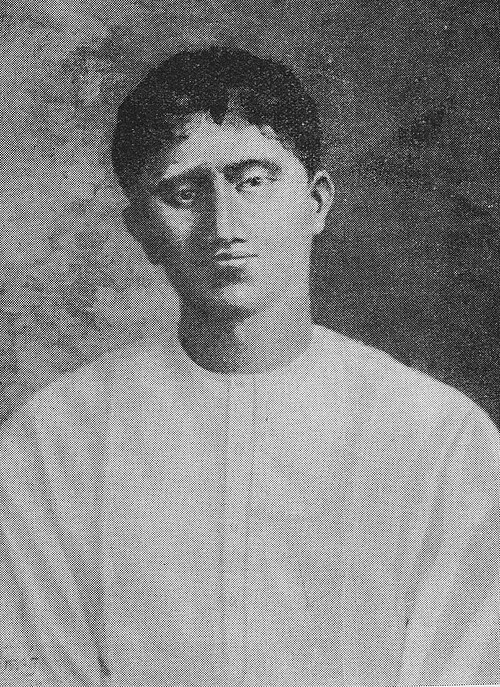
Gopinath Saha was born on December 16, 1905, into a Bengal seething with political ferment and resistance against British colonial rule. From a very early age, he was drawn into the revolutionary movement that had taken deep roots in the region. Bengal, during the early decades of the twentieth century, was a crucible of nationalist ideas, secret societies, and militant action. Young men like Saha grew up in an atmosphere where the call for freedom was not merely a political slogan but a moral imperative, often interpreted through the language of sacrifice and martyrdom.
The British administration in Bengal relied heavily on a strong police and intelligence apparatus to crush revolutionary activity. One of the most feared figures in this apparatus was Charles Tegart, the head of the Detective Department of the Calcutta Police and a central figure in the campaign against revolutionaries. Tegart symbolized colonial surveillance and repression, and for many young nationalists he represented the face of an unjust and unaccountable authority. It was against this backdrop that Gopinath Saha decided to take an extreme step, believing that the removal of such figures was essential to weakening British control.
On January 12, 1924, Saha attempted to assassinate Charles Tegart. The plan, however, went tragically wrong. Instead of Tegart, Saha mistakenly shot Ernest Day, a white civilian born in 1888, who had gone to the location on official business. The incident shocked Calcutta and provided the colonial government with yet another example to portray revolutionary nationalism as reckless and violent. For the revolutionaries, however, the episode was a grim reminder of the high risks involved in clandestine action and the heavy moral burden that accompanied it.
Gopinath Saha was soon arrested and put on trial. The colonial legal system moved swiftly, and the outcome was never in doubt. On March 1, 1924, he was hanged in Alipore Central Jail. He was only eighteen years old. His execution transformed him into a martyr in the eyes of many Indians, particularly the youth who saw in him a symbol of uncompromising resistance. Pamphlets, poems, and quiet remembrances kept his memory alive, even as the British authorities sought to erase it through silence and fear.
Saha’s martyrdom had consequences that extended beyond the revolutionary underground. It intensified existing ideological tensions within the Indian National Congress and contributed to the widening gap between different approaches to the freedom struggle. At the heart of this divide was a fundamental question. Should Indians engage with the limited constitutional reforms offered by the British, or should they reject them outright in favor of mass agitation and moral pressure?
By 1920, the Congress was already split into two rival factions. One group advocated participation in the popular councils introduced under the Montagu Chelmsford Reforms of 1919. They believed that even limited self governance could be used as a platform to advance Indian interests and expose the shortcomings of colonial rule from within. The other faction, inspired by Mahatma Gandhi, insisted on a complete boycott of legislatures as part of a broader strategy of non cooperation. For them, participation risked legitimizing an unjust system and diluting the moral force of the nationalist movement.
Chittaranjan Das emerged as the leading figure of the council entry group. A charismatic leader from Bengal, Das commanded immense respect and was deeply affected by the execution of young revolutionaries like Gopinath Saha. While Das did not endorse violence, he argued that constitutional work and political negotiation were necessary complements to mass movements. Gandhi, on the other hand, viewed revolutionary violence as harmful to the ethical foundations of the struggle and remained committed to non violence as both principle and strategy.
The clash between these two visions came to a head within the Congress. In a crucial vote, Das lost by a narrow margin of just eight votes. While the main resolution aligned with the Gandhian position and was passed, the amendment supporting council entry was rejected by a vote of seventy eight to seventy. The closeness of the result was significant. It revealed that Gandhi did not command an uncontested moral authority within the organization and that a substantial section of Congress leaders remained unconvinced by an absolute boycott.
The narrowness of the margin led Gandhi to realize that he could not easily dominate his rivals or impose his vision without resistance. As one rival sharply observed, he could not simply force his saintliness upon countrymen who were navigating a more complex and less idealistic political reality. The execution of Gopinath Saha, and the emotional response it generated, sharpened these debates by highlighting the desperation and impatience felt by many young Indians.
In retrospect, Gopinath Saha’s life and death illuminate the intense moral and strategic dilemmas of India’s freedom struggle. His actions reflected the anguish of a generation that felt suffocated by colonial repression and unconvinced that gradual reform would ever lead to true independence. At the same time, the controversy surrounding his martyrdom underscored the deep divisions within the nationalist movement over the means and ends of liberation. Saha’s story remains a poignant reminder that India’s road to freedom was shaped not only by consensus and unity but also by profound disagreement and sacrifice.