



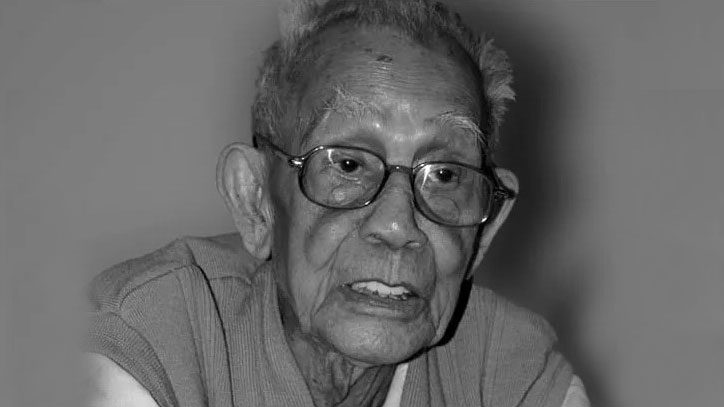
The history of India’s anti British freedom movement is filled with towering names and dramatic moments, but it is also shaped by the courage of young revolutionaries whose sacrifices often remain less known. Among them stands Binod Bihari Chowdhury, a fearless activist who devoted his life to the struggle for independence. Born on January 10, 1911 in North Bhurshi village of Boalkhali thana in the Chittagong district, Binod Bihari Chowdhury grew up in a time of political repression, economic hardship, and rising nationalist consciousness. His early exposure to colonial injustice shaped his revolutionary spirit and led him to become a trusted comrade of the legendary revolutionary leader Surya Sen, popularly known as Masterda.
Binod Bihari Chowdhury came of age during a period when revolutionary nationalism was gaining strength in Bengal. British rule had created widespread resentment among the youth, particularly in regions like Chittagong where political awareness and resistance were growing rapidly. From a young age, Binod Bihari was drawn to the ideals of freedom, sacrifice, and resistance. Influenced by the revolutionary literature of the time and inspired by leaders who believed in direct action, he soon found his path within the revolutionary movement led by Surya Sen. Masterda Surya Sen was not only a strategist but also a mentor who inspired young men to dedicate their lives to the cause of independence.
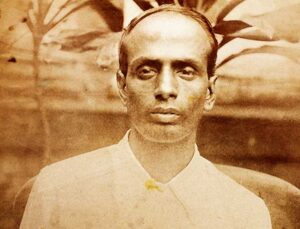 Binod Bihari Chowdhury became one of Masterda’s youngest and most committed associates. His role in the revolutionary movement culminated in his participation in the historic Chittagong Armory Raid of 1930, one of the most daring acts of armed resistance against British colonial power. The plan aimed to strike at the very foundation of British authority by seizing weapons, disrupting communication, and declaring the end of colonial rule in the region. For the young revolutionaries, the armory raid was not merely an act of violence but a symbolic declaration that Indians were ready to challenge imperial power with courage and resolve.
On the night of the Chittagong Armory Raid, Binod Bihari Chowdhury stood alongside Surya Sen and other revolutionaries with a clear sense of purpose. The revolutionaries successfully destroyed the telegraph office, cutting off British communication lines and creating confusion among colonial authorities. They looted the armaments of the auxiliary force, aiming to arm themselves for a broader uprising. Although the plan faced limitations and challenges, the boldness of the operation sent shockwaves through British India and inspired freedom fighters across the country. Binod Bihari’s participation in this mission demonstrated his willingness to risk everything for the dream of a free nation.
The aftermath of the armory raid was marked by intense repression. British authorities launched a massive crackdown, arresting, torturing, and executing many revolutionaries. Binod Bihari Chowdhury, like several of his comrades, faced imprisonment and severe hardship. Despite the physical and psychological suffering, he remained unbroken in spirit. His years in prison strengthened his ideological commitment and reinforced his belief that freedom demanded unwavering sacrifice. Unlike many who faded into obscurity after imprisonment, Binod Bihari continued to uphold revolutionary values throughout his life.
What sets Binod Bihari Chowdhury apart is not only his participation in a historic event but also his longevity as a witness to history. He lived to see the Independence of India, the formation of new nations in the subcontinent, and the changing political landscape of Bengal. While many revolutionaries did not survive to witness freedom, Binod Bihari carried the memories of the movement into independent India. His life became a living link between the revolutionary past and the present, reminding later generations of the price paid for freedom.
Binod Bihari Chowdhury’s contribution to the freedom struggle challenges the tendency to view history only through a few prominent figures. His story represents the countless young men and women who joined the movement driven by conviction rather than recognition. As a close associate of Surya Sen, he embodied the spirit of collective struggle, discipline, and selflessness that defined the Chittagong Revolutionary Movement. His courage was rooted not in personal ambition but in a deep sense of duty toward his people and his land.
In remembering Binod Bihari Chowdhury, it becomes clear that the anti British movement was not sustained by ideology alone but by individuals who were willing to act decisively in moments of great risk. His life serves as a reminder that history is shaped by those who dare to challenge injustice, even when success is uncertain. Born in a small village and drawn into a movement that shook an empire, Binod Bihari Chowdhury’s journey stands as a testament to youthful bravery, revolutionary commitment, and enduring patriotism.
Today, his legacy remains relevant as a symbol of resistance and moral courage. The story of Binod Bihari Chowdhury is not merely a chapter in the history of Chittagong or Bengal, but a powerful example of how ordinary individuals can rise to extraordinary heights in the pursuit of freedom. His life reminds us that independence was achieved not only through negotiations and mass movements but also through the fearless actions of revolutionaries who believed that liberty was worth any sacrifice.