



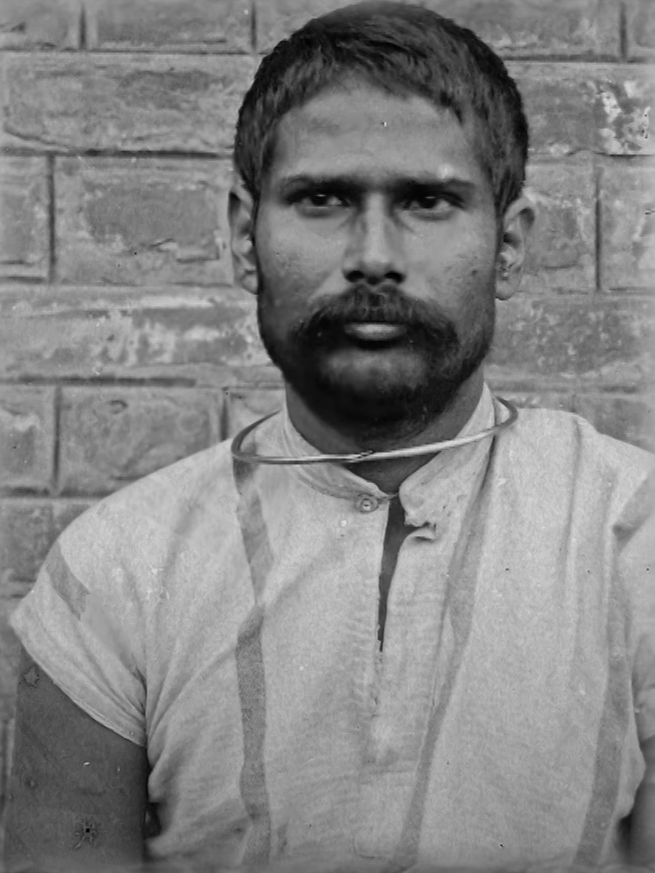
Bipin Babu, or Shri Bipin Behari Gangopadhyay, may not be widely known in the conventional narratives of India’s anti-colonial struggle, but he was truly a guiding master of the armed revolutionary tradition. As one of the chief figures behind the historic and world-shaking 1914 Rodda Arms Heist, his entire life became synonymous with terror for the British authorities.
Early Life and Education
Bipin Behari was born on 5 November 1887, at Halisahar in the 24 Parganas district of undivided Bengal. From childhood, he showed curiosity about history and politics, which steered him toward revolutionary activism. Coming from an educated family, he was exposed early to intellectual and nationalist currents of the time. He studied at Presidency College, Calcutta, where the blend of Western education and patriotic fervor deeply influenced him. As India was awakening politically, his mind and spirit gravitated to rebellion and revolution.
Rise of a Revolutionary Spirit
In the late 19th and early 20th centuries, Bengal was the epicenter of nationalist and revolutionary activity. Under British rule, Indians faced brutality and divisive policies such as the 1905 Partition of Bengal, intended to fracture the province’s unity. Like many of his contemporaries, the young Gangopadhyay rose against such oppression.
Though inspired by well-known revolutionary groups like Anushilan Samiti and Jugantar, Bipin Behari’s independent vision led him to found a new, self-reliant organization called Atmonnati Samiti (Society for Self-Development). Physical strength training, wrestling, sword and knife practice, along with the mastery of firearms—revolvers and rifles—became the path to his only goal: to break the chains of enslavement binding the Motherland.
Revolutionary Activities
His active revolutionary career began in 1908 with his involvement in plots to assassinate oppressive British officials. One such plot targeted Lieutenant Governor Edward O’Dwyer, but it was uncovered by British intelligence. By sheer fortune, Bipin Behari escaped at first but was eventually arrested during a broader anti-revolutionary crackdown in 1909.
He was tried and convicted for conspiracy to assassinate, subjected to severe imprisonment and torture. Despite brutal conditions, Bipin Behari remained steadfast, embodying an indomitable revolutionary spirit. Through his writings and discussions, he became a source of inspiration for fellow revolutionaries. British intelligence described him as “a man of formidable strength and intellect whose aim never misses.”
Though today Shri Bipin Behari Gangopadhyay is a lesser-known figure, his contributions to India’s freedom struggle remain immortal. His courage and armed defiance inspired a generation of revolutionaries to take up resistance against colonial tyranny.
Following national independence, his name receded into the margins of history as the narrative of nonviolent struggle grew dominant. However, with renewed academic interest in India’s revolutionary past, Gangopadhyay’s forgotten legacy is once again gaining recognition.
Conclusion
The life and legacy of Shri Bipin Behari Gangopadhyay stand as a blazing testament to India’s freedom movement—of courage, conviction, and sacrifice. Though less renowned than other leaders, his impact remains undeniable. His unwavering belief in armed resistance underscores that India’s liberation was fought on many fronts, each vital in its own way. Truly, he was among the finest sons of the revolution