



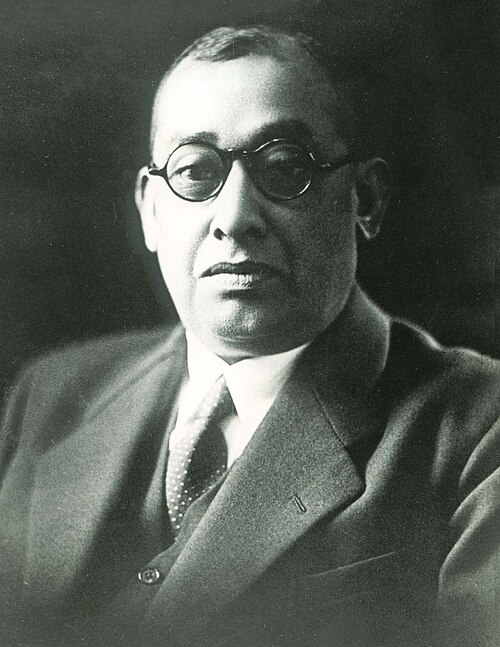
January 21 marks the death anniversary of Sri Rash Behari Bose, a towering figure of India’s revolutionary movement whose life was defined by courage, sacrifice, and an unbreakable commitment to the motherland. Remembering him is not merely an act of homage but a reminder of a fierce tradition of resistance against British Imperialism. Rash Behari Bose was not a revolutionary of words alone. He was a strategist, an organizer, and above all a lifelong fighter who believed that freedom had to be seized through action and discipline.
Born in 1886 in Bengal, Rash Behari Bose grew up during a period when India was simmering with discontent under colonial rule. From an early age he displayed a sharp intellect and a fearless temperament. While many nationalist leaders sought gradual reform, he believed that British Imperialism would never voluntarily loosen its grip on India. This conviction pushed him toward revolutionary politics, where secrecy, planning, and international coordination became his tools of struggle.
One of the most significant chapters of his life was his role in organizing armed resistance during the First World War through what later came to be known as the Hindu German Conspiracy. Rash Behari Bose understood that a global conflict presented a rare opportunity to strike at the British Empire when it was militarily stretched. He worked tirelessly to coordinate Indian revolutionaries, German support networks, and soldiers within the British Indian Army. His aim was clear to ignite a nationwide uprising that would shatter colonial control. Although the conspiracy was ultimately uncovered and suppressed, it sent shockwaves through the British administration and exposed the depth of revolutionary organization in India.
After evading British arrest through daring escapes, Rash Behari Bose found refuge in Japan. Exile did not weaken his resolve. Instead, it expanded his vision. In Japan he built networks, gained allies, and devoted himself fully to the cause of Indian independence. His life in a foreign land was marked by hardship and surveillance, yet he never abandoned his mission. He used every platform available to keep the idea of armed resistance alive and relevant.
During the Second World War, Rash Behari Bose once again emerged as a central figure in the struggle against British Imperialism. Recognizing the new global conflict as another historic opening, he played a crucial role in the formation of the Indian National Army. Working closely with Indian prisoners of war in Southeast Asia, he laid the organizational and ideological foundations of the INA. It was Rash Behari Bose who later invited Subhas Chandra Bose to take over the leadership, demonstrating his selflessness and clarity of purpose. For him, the movement mattered more than personal recognition.
Beyond his revolutionary activities, Rash Behari Bose was also deeply engaged with ideological and cultural nationalism. His association with the Hindu Mahasabha and his role as its president reflected his belief that national regeneration required social and cultural awakening alongside political freedom. He saw Indian civilization as a source of strength and unity in the fight against colonial domination. This aspect of his life is often less discussed but remains crucial to understanding the full scope of his thinking.
What truly sets Rash Behari Bose apart is the consistency of his commitment. From his early revolutionary days in India to his final years in Japan, he never retreated into comfort or compromise. Even as age and illness took their toll, his mind remained focused on India’s liberation. His death on January 21 in 1945 came just two years before India finally achieved independence, a freedom for which he had sacrificed his entire life.
Today, remembering Rash Behari Bose is an act of reclaiming a forgotten legacy of fearless resistance. He represents a stream of Indian nationalism that was bold, international in outlook, and unafraid to confront imperial power through armed struggle. His life reminds us that freedom was not won by a single path but through the combined efforts of thinkers, organizers, and fighters who operated across continents and decades.
On this death anniversary, Sri Rash Behari Bose stands before us as an enduring symbol of revolutionary dedication. He was ever a fighter, not just in action but in spirit. His story urges us to honor the sacrifices that built the nation and to remember that the price of freedom was paid by those who refused to bow, even when the odds were overwhelming.