



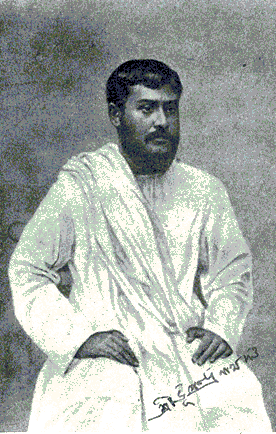
Dr. Bhupendranath Dutta, the youngest brother of Swami Vivekananda, carved his own path as a fearless revolutionary, pioneering sociologist, and intellectual giant, earning global acclaim through sheer merit. Born on September 04, 1880, in Calcutta to Vishwanath Datta and Bhuvaneshwari Devi, he grew up in a family steeped in reformist fervor amid British colonial rule. His death on December 25, 1961, marked the end of an era of Indian nationalism, yet his contributions endure as testaments to unyielding patriotism and scholarly rigor.
Dutta’s early life mirrored the turbulence of late 19th-century Bengal, where spiritual enlightenment intertwined with calls for freedom. While his brother Narendranath (Swami Vivekananda) embraced Vedanta and global outreach, Bhupendranath channeled youthful energy into direct action against imperialism. Educated at Presidency College and Calcutta University, he initially pursued journalism but soon joined the burgeoning revolutionary movement. His intellectual sharpness drew him to Anushilan Samiti, the secret society fostering armed resistance, where he honed skills in propaganda and organization.
In 1906, Dutta’s audacious arrest for sedition electrified the youth. At 26, he faced trial for articles in Yugantar, a militant newspaper advocating boycott of British goods and self-rule. Sentenced to one year in Presidency Jail, he emerged unbowed, penning Bhabanikripanath from prison, a critique blending nationalism with social reform. Undeterred, he traveled abroad in 1907 to evade capture, visiting Europe, America, and Japan. In London, he studied under Scottish economist J. Shield Nicholson, earning a sociology doctorate from the University of London in 1911. This academic pursuit masked his revolutionary networking; he liaised with Irish and Indian exiles, smuggling arms and funds back home.
Dutta’s international odyssey showcased his versatility. In Paris, he mingled with Indian diaspora, while in the U.S., he lectured on Indian culture, subtly fundraising for independence. His Bharater Swadhinata (India’s Independence), written during exile, dissected colonial economics, arguing that political subjugation bred cultural decay. Returning to India in 1915 amid World War I, he faced renewed imprisonment under the Defence of India Act. Released in 1918, he shifted from militancy to intellectual activism, recognizing non-violence’s growing appeal post-Gandhi.
As a sociologist, Dutta pioneered empirical studies of Indian society. His 1925 magnum opus, Indian Social Life, analyzed caste dynamics, urbanization, and women’s roles with data from censuses and fieldwork. Rejecting Western stereotypes, he portrayed Hinduism’s adaptability, crediting Vivekananda’s universalism. Books like Hinduism (1926) and Bharatiya Samaj Tatwa bridged Eastern philosophy with modern science, influencing thinkers like Radhakamal Mukerjee. Elected president of the All India Sociological Conference in 1937, he championed interdisciplinary approaches, blending history, economics, and anthropology.
Dutta’s journalism amplified his voice. Editing Vaban and contributing to Forward, he critiqued communalism and untouchability, urging Hindu-Muslim unity. A Freemason and theosophist, he embodied syncretism, yet remained rooted in Sanatan Dharma. His memoirs, Aprishto Atmakatha (Unpublished Autobiography), reveal personal struggles: reconciling Vivekananda’s shadow with self-assertion, and enduring family tragedies like his brother’s early death.
Post-independence, honors befell him. Nominated to the Bengal Legislative Council, he advocated labor rights and education. Jawaharlal Nehru consulted him on cultural policy, appointing him to advisory roles. At 81, Dutta’s passing in Kolkata closed a life of quiet dignity. Tributes poured from across India; President Rajendra Prasad lauded his “blend of action and intellect.”
Dutta’s repute stemmed not from familial fame but personal excellence. Unlike Vivekananda’s mysticism, he wielded reason as a weapon, proving revolutionaries could evolve into scholars. In an age of extremes, he navigated militancy to moderation, sociology to spirituality. His works, translated into multiple languages, remain staples in Indian academia. Today, as Bangladesh and India grapple with identity amid partitions’ scars, Dutta’s vision of cohesive social fabric resonates.
Forgotten amid louder freedom fighters, Dutta exemplifies understated heroism. His life affirms meritocracy: birth mattered less than deeds. On this December 25 anniversary, revisiting his legacy honors a polymath who fought chains with both sword and scalpel, enriching India’s soul.